
The Importance of Bedtime Routines (and Why They Matter More Than You Think)
Bedtime can feel like a lot. After a long day, you’re tired, your child is tired, and somehow sleep still feels out of reach. Some nights go smoothly, and others feel chaotic or emotional, and it can be hard to understand why.
One of the most important foundations of healthy sleep is a consistent bedtime routine. It won’t magically fix everything, but it can make nights feel calmer and more predictable. When routines are gentle and familiar, they let your child know what to expect and help their brain and body prepare for sleep.
What a Bedtime Routine Really Is
A bedtime routine is a short, calming set of steps that happens in the same order each night before sleep.
It helps your child understand that sleep is coming and that they are safe.
For some families, that routine includes a bath.
For others, it doesn’t.
Some routines involve feeding at the beginning.
Others end with feeding.
There is no one right way to do this.
What matters most is that the routine feels predictable and calming for your child and manageable for you.
Why Routines Help So Much
Young children and babies thrive on predictability.
When the same steps happen each night, your child’s brain begins to recognize bedtime. Their body starts to relax. Sleep no longer feels sudden or confusing.
Over time, routines also help trigger the release of melatonin, the hormone that helps us feel sleepy. This makes falling asleep easier and more natural.
Routines don’t force sleep.
They support it.
Newborn Bedtime Routine Example (0-12 Weeks)
Bedtime routines can be introduced as early as day one.
In the newborn stage, they don’t need to look perfect or happen at the same time each night.
Repeating the same calming steps each evening helps your baby begin to recognize the difference between day and night. More on day/night confusion here!
Here is an example of a simple newborn bedtime routine:
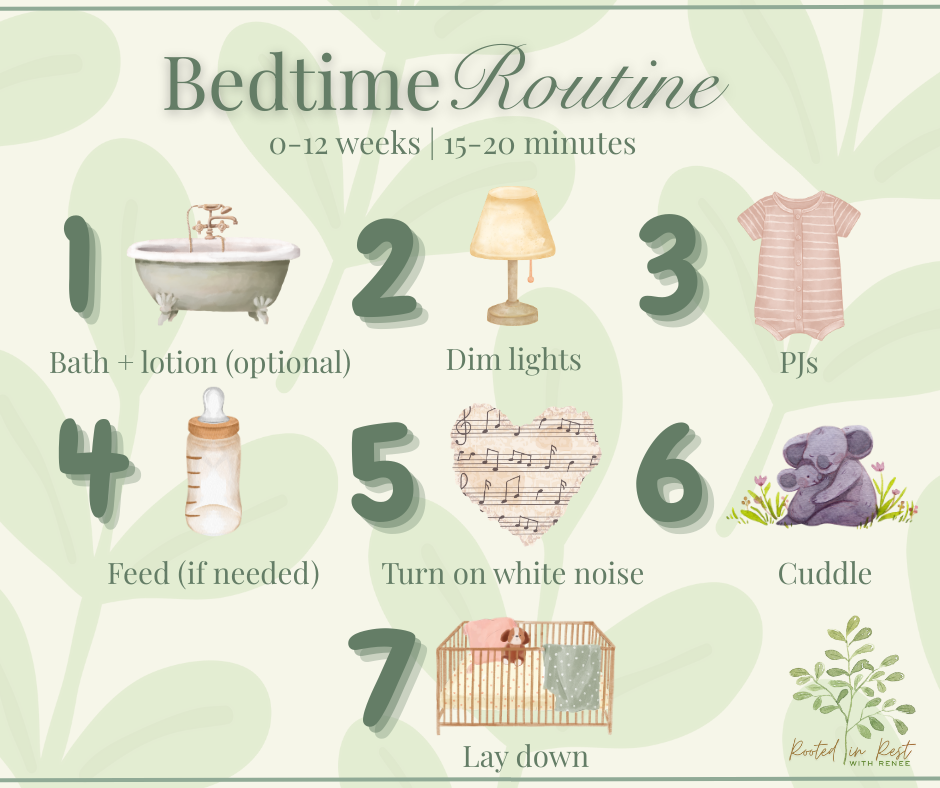
This routine might only take 15 to 20 minutes. Feeding can happen at the beginning or the end, depending on your baby’s needs. Some nights will look different than others, and that is completely normal.
The goal at this stage is familiarity, not consistency at a specific time.
Bedtime Routine Example for Babies 4 Months and Older
As babies get a little older, routines often become more predictable.
Many families find that a slightly longer routine helps their baby wind down more easily and transition into sleep with less stress.
Here is an example of a bedtime routine for babies around 4 months and older:
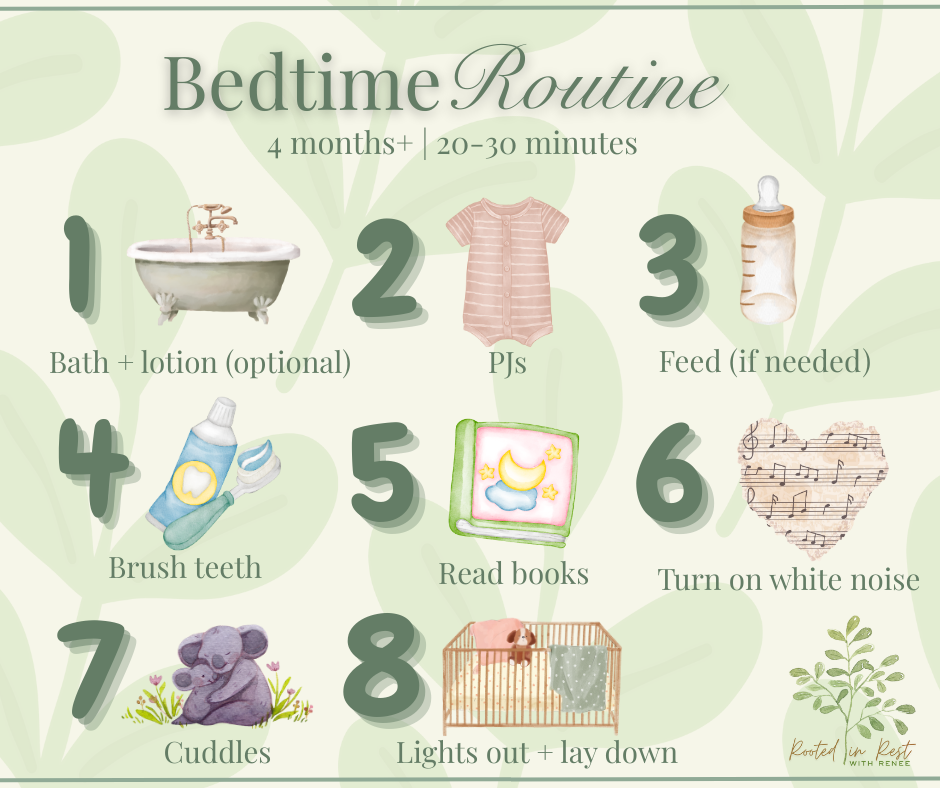
This routine is typically around 20 to 30 minutes. The order of the steps matters more than the exact timing. Choose activities that feel calming and realistic for your family.
If something in this routine doesn’t work for you, it’s okay to change it. A routine should support your family, not add pressure.
What About Nap Routines?
Nap routines are helpful too, but they don’t need to be as long or involved as bedtime routines.
In fact, nap routines work best when they are simple.
A short nap routine helps your baby recognize that sleep is coming, even during the day, without overstimulation.
Here is an example of a gentle nap routine:
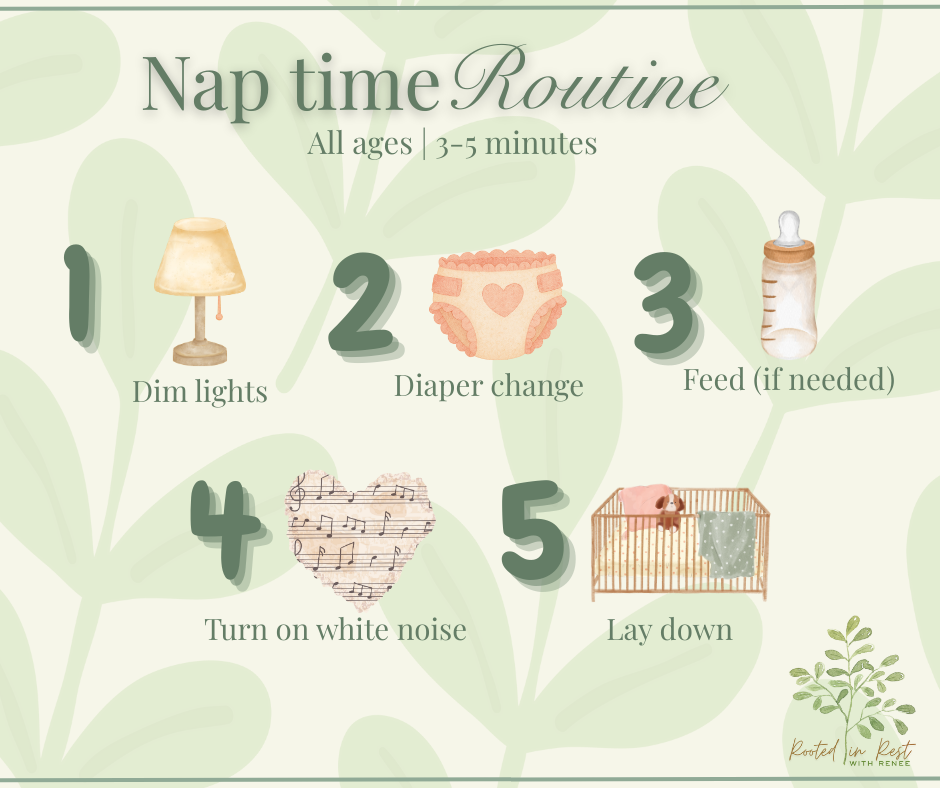
Nap routines are often just 3 to 5 minutes. A diaper change, a song, and into the crib can be enough. The goal is consistency, not length.
If You Miss a Routine, It’s Okay
Skipping a routine once does not undo your progress.
Life happens.
Hard days happen.
Unexpected nights happen.
What matters is the overall rhythm over time, not doing everything perfectly every night.
If Bedtime Is Still Hard
A bedtime routine is an important foundation, but it is not the only piece of the sleep puzzle.
Timing, daytime sleep, development, and your child’s temperament all play a role too.
If bedtime feels heavy, gentle guidance can help. Support doesn’t have to mean forcing change. It can mean working with your child, honoring their needs, and finding a rhythm that feels sustainable for your family.
If it would help to talk things through, I offer a free 15-minute sleep chat where we can look at what’s going on and explore gentle next steps. I also offer in-home and virtual sleep support for families who want more hands-on guidance.