
Under-tired VS. Overtired: How to Tell the Difference
If you’ve ever thought:
“Are they waking because they’re not tired enough… or because they’re TOO tired?”
You are not alone.
One of the most confusing parts of baby sleep is figuring out whether your child needs more awake time or less. And unfortunately, the symptoms can look similar… night wakings, short naps, early mornings, false starts.
Let’s briefly break it down.
What is Sleep Pressure?
In simple terms, sleep pressure is the biological drive for sleep that builds the longer we are awake.
Think of it like a balloon slowly filling with air.
The longer they’re awake, the more pressure builds
If you lay them down:
Too soon: Not enough pressure (under-tired)
Too late: Too much pressure, stress hormones rise (overtired)
The goal isn’t perfection. It’s balance!
What Happens When a Baby is Under-Tired?
Under-tired means they simply haven’t been awake long enough to build enough sleep pressure.
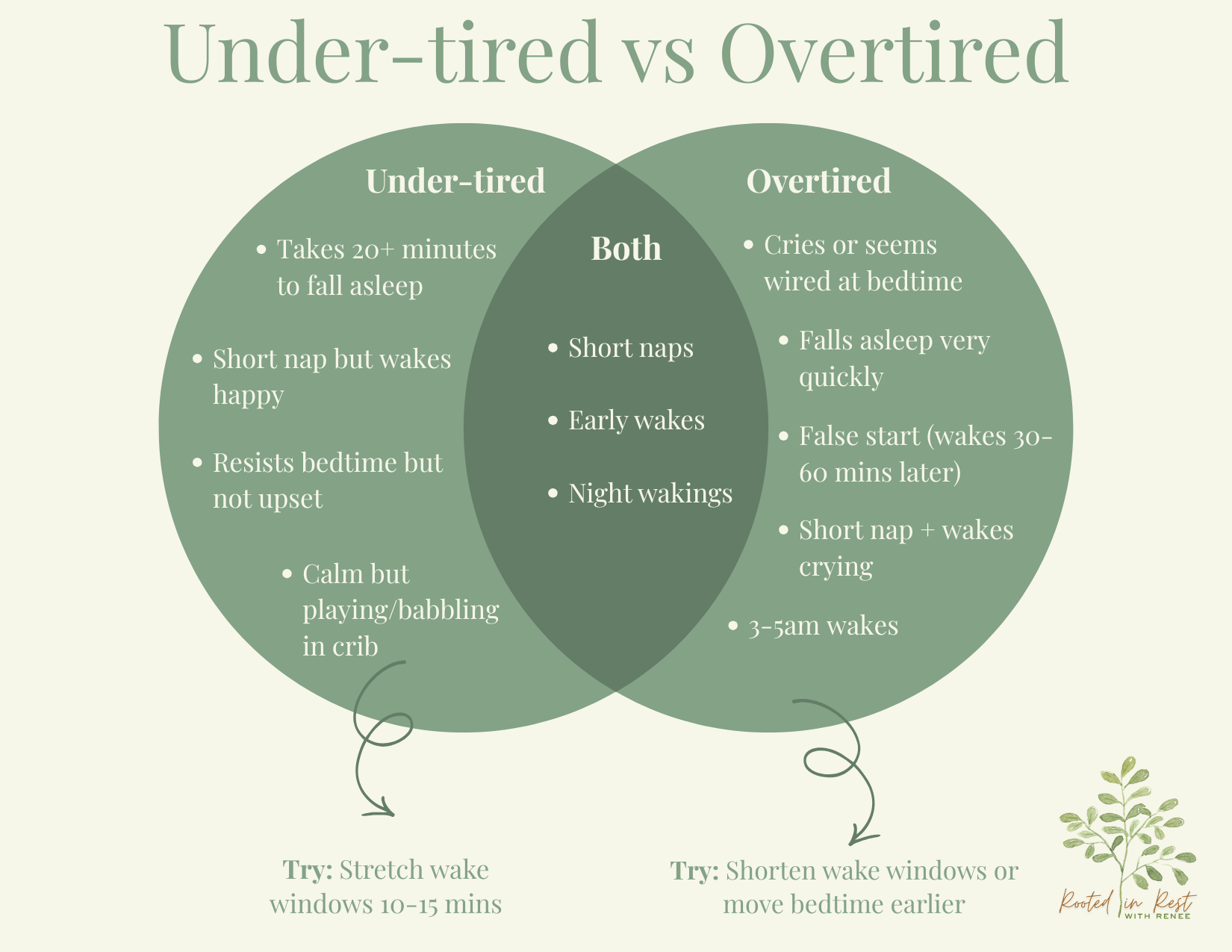
Common signs of under-tired:
Takes a long time to fall asleep
Rolling, babbling, or playing in the crib
Happy but wide awake at bedtime
Short naps where baby wakes happy and content
Early morning wake and fully alert
At bedtime, under-tired babies often seem calm, just not… sleepy.
This is usually when a wake window needs to be stretched slightly.
What Happens When a Baby is Overtired?
Overtired is a bit different. This is when wake windows go too long and cortisol (stress hormone) kicks in.
Here’s the tricky part: Overtired babies often (not always) fall asleep FAST.
Which makes parents think: “Oh good, they were tired enough.”
But then…
Common signs of overtired:
Crying at bedtime
Falling asleep but quickly but waking 30-60 minutes later (AKA false start)
Frequent night wakings
Early morning wakings
Short naps where baby wakes upset
More clingy or dysregulated behavior
Why it Gets Confusing
Because BOTH under-tired and overtired can cause:
Short naps
Early wakes
Night wakings
The biggest difference is how your baby wakes and how they fall asleep.
Ask yourself:
Did they fight sleep or seem wired? (under-tired)
Did they cry hard and crash quickly? (overtired)
Did they wake from a nap happy? (under-tired)
Did they wake crying and disoriented? (overtired)
What Should You Do?
If you suspect under-tired
→ Stretch wake windows by 10-15 minutes
→ Protect full naps
→ Keep bedtime consistent
If you suspect overtired:
→ Shorten wake windows slightly
→ Offer earlier bedtime on short nap days
→ Focus on calming, predictable routines
And remember– wake windows are ranges not rules!
A 9-month-old might tolerate 3-3.5 hours… but not every single day.
The Gentle Reminder Parents Need
One short nap does not mean you’ve ruined the schedule.
One early wake does not mean everything is wrong.
Sleep is dynamic. Development, teething, growth spurts, and milestones all shift things temporarily.
The goal isn’t chasing perfection.
It’s observing patterns and adjusting slowly.
If you’re Sill Unsure…
Not sure if you need full coaching?
My Mini Sleep Reset is designed for families who just need help troubleshooting one specific sleep struggle — like early morning wakes or short naps.
Small tweaks. Clear direction. Ongoing support while you implement.